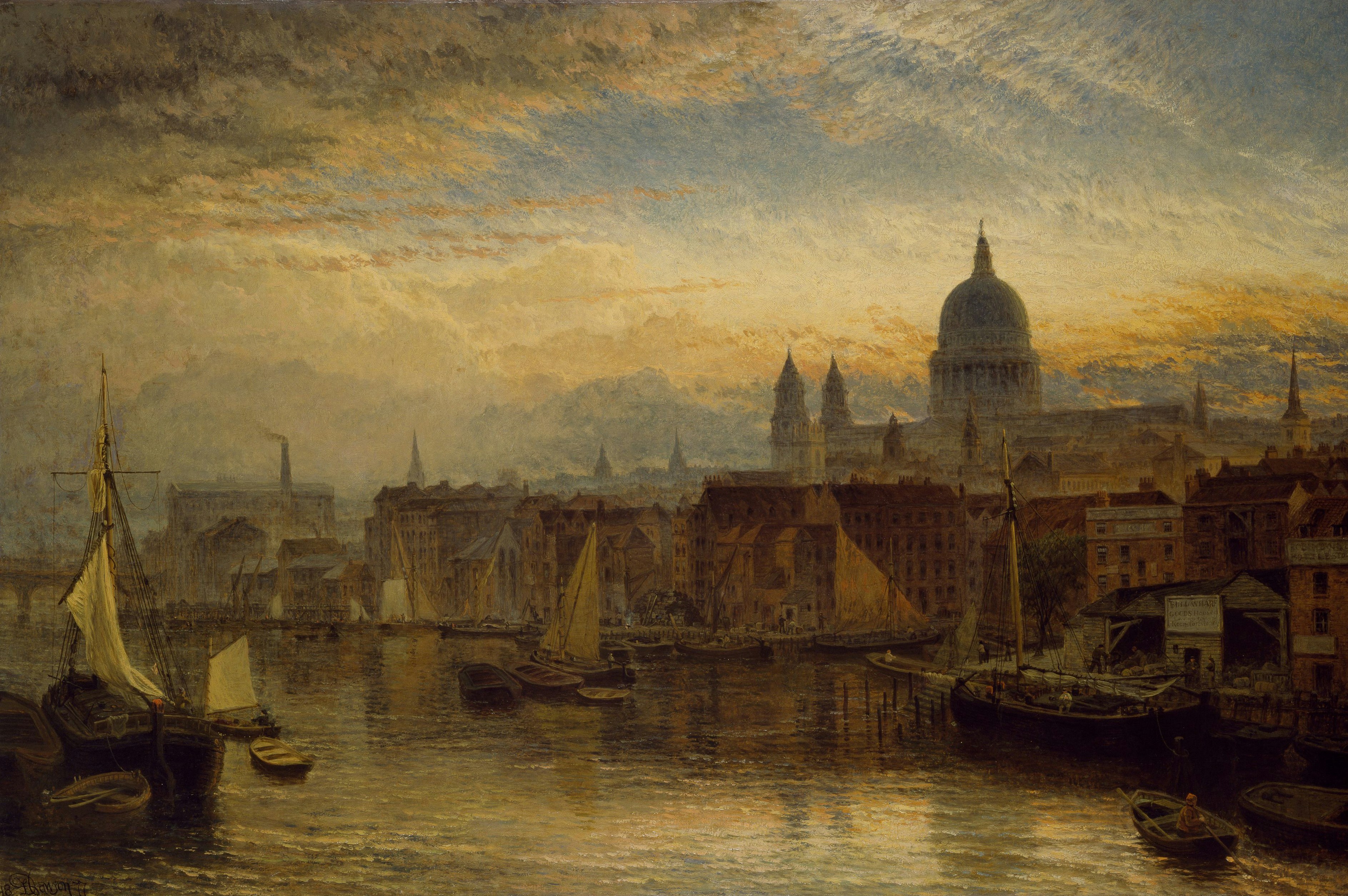
In the fifteenth century, in the workshops of the Flemish Low Countries, something remarkable happened to painting. Jan van Eyck, or perhaps a predecessor whose name history has not preserved, discovered that by suspending pigment in linseed oil rather than in egg tempera, a painter could do something previously impossible: change their mind. They could blend. They could layer. They could return to a passage days later and rework it without the unforgiving speed of drying that earlier techniques demanded. The medium they discovered has not been surpassed in six hundred years.
The Chemistry of Permanence
Oil paint does not dry in the conventional sense. It oxidises, a chemical process far slower and more complex than simple evaporation. Each layer undergoes a molecular transformation as oxygen bonds form within the oil medium, creating a flexible, durable film that will outlast most of the materials it has ever been applied to. A properly executed oil painting on linen, primed with lead white, built up in lean-over-fat layers, finished with protective varnish, can remain structurally stable for centuries. We know this because many have. The Arnolfini Portrait is still intact, still readable, still capable of arresting a viewer across five and a half centuries of accumulated human experience.
This chemical durability matters. It is why collectors who are serious about acquisition, who intend a work to outlive them, to pass to children and grandchildren, still reach for oil on canvas above all other mediums. The medium carries an implicit guarantee that acrylic, watercolour, and certainly digital reproduction cannot offer in the same terms.
The Range That No Other Medium Matches
Oil paint can be applied as a transparent glaze barely visible to the naked eye, or built up into a thick, sculptural impasto whose shadows are cast in actual relief. It can be made to flow like water or to sit on the surface with the texture of butter. It can be scraped back, overpainted, wiped with a rag, glazed over with a colour from an entirely different part of the spectrum. No other medium extends across this full range while remaining, throughout, responsive to the painter's hand.
This is why a painter who begins working in oils rarely leaves. The relationship between the hand and the medium becomes deeply personal, a particular studio smell, a preferred drying time, a palette developed over years of daily decisions. Painters describe oil paint as the only medium that tells you when you have gone too far. That resistance, the way oil paint resists the impatient and rewards the attentive, is inseparable from the quality of the works it produces.
Why Contemporary Painters Keep Returning
Every generation since the Impressionists has staged a revolution against oil paint. The twentieth century brought acrylic, alkyd, encaustic, digital, and countless hybrid approaches. Each found its practitioners, its defenders, its brief dominion. And yet the studios of the most serious painters in Tokyo, Vienna, Mexico City, and Cape Town are still organised around linseed oil, turpentine, and linen. The revolution, it turns out, keeps failing.
Part of the reason is simply that the best painters are attracted to difficulty. Oil demands patience, technical knowledge, and a willingness to work slowly. But a deeper reason may be that oil paint, more than any other medium, rewards looking. A well-glazed oil painting reveals something new at each distance: from across a room, it presents its composition; from a metre, its drawing; from close enough to see individual brushmarks, its entire process of becoming. This layered legibility is what makes original oil paintings irreplaceable in the age of digital reproduction. You cannot experience them from a screen. The work only really exists in the room with you.